
AZERBAIJAN: Nakhchivan and Greater Caucasus
June 1st – 14th 2010
Benoît Paepegaey
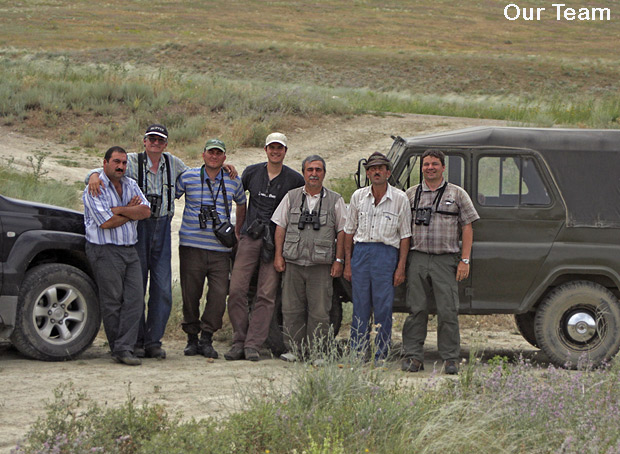
At the south-eastern corner of Western Palaearctic, on the shore of the Caspian Sea and the slopes of the Caucasus lies a country still widely unknown to west European birdwatchers. Known to most of us for its oil fields, Azerbaijan has not so far managed to make it to the favourite destinations list of even the most adventurous west Palaearctic birders, as opposed to Eastern Turkey, Georgia and Armenia. Those were also the destinations I had selected for future trips to the south-east, when Serge contacted me last winter: he was planning to go to Azerbaijan with Pavel Simeonov (Branta Tours), who had already led a tour there the year before, and wanted to complete his knowledge of the field, in order to be able to offer the complete set of Caucasian specialities for his future tours. It really didn´t take much time to be convinced to join in the expedition!
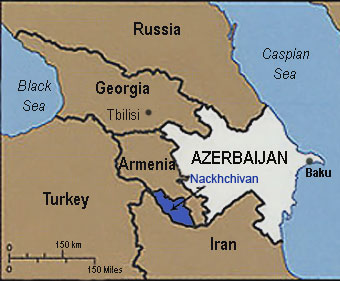
Actually, we were not only going to Azerbaijan, and this is where it started to be really interesting: Pavel wanted to visit a place called Nakhchivan: a piece of Azerbaijan south-east of the Lesser Caucasus with no border with the main territory, surrounded by Iran, Armenia and Turkey. I had been looking for years at the Western Palaearctic map, and had never heard about it! This was truly going to be exciting, especially since many species that are absent or very hard to find in the main part of Azerbaijan could be expected there! After a few days in Nakhchivan, the plan was to move back to Baku and to travel north to the Greater Caucasus to see the emblematic species there and among them, a species I had been dreaming of for years: the Güldenstädt´s Redstart!The plan was quite simple on the paper, but wasn’t that easy on the administrative side and we only got confirmation a few days before departure that we would be allowed to enter Nakhchivan. It was a relief when the news came, although there was certainly enough to see in Azerbaijan even without this little extra!
Participants:
Serge Risser – France
Benoît Paepegaey – France
Pavel Simeonov – Tour leader (Branta-Tours)
Species recorded: 162
Description
June 1st, 2010:
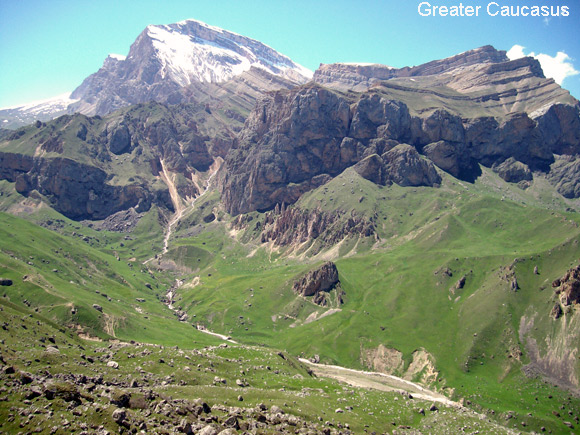
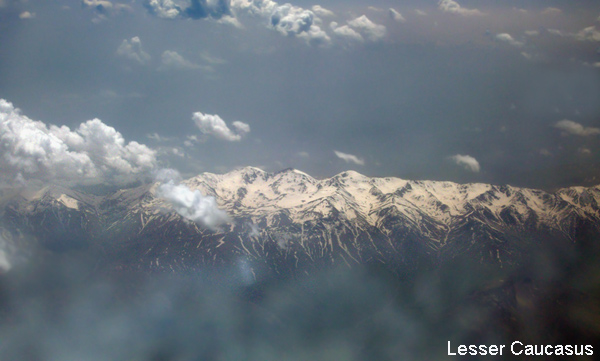
Serge and I met up at Paris Charles de Gaulle airport and took our direct flight Paris-Baku on Azerbaijan airlines. The excitation rose after a few hours, when we reached the eastern shore of the Black Sea: a quick look to our right allowed us to sea the Batumi pass in Georgia, the rising hotspot for migrating raptors. And then we saw them: Lesser on the right, Greater on the left: both Caucasus were here, so close!
We landed on time in Baku and with no time proceeded to the passport control. After about an hour, we finally managed to get our visas and were free to discover Azerbaijan. Our local guide, was waiting for us at the airport. Pavel Simeonov was only arriving the day after, so we had a few hours to visit the Baku area. We settled at a cosy datcha and went for a few hours in the streets of Baku. Although most of the city and its suburbs are very busy and noisy compared with our standards, we were charmed by the old town and its historic monuments. The walk along the Caspian Sea (which, in fact, is a lake) was also quite enjoyable especially in these already hot conditions. Birds are far and few in the city, but Common Swifts were everywhere. A few Caspian Gulls were flying along the Caspian, but downtown Baku is certainly not a place for birding, so we took time for an historical break.
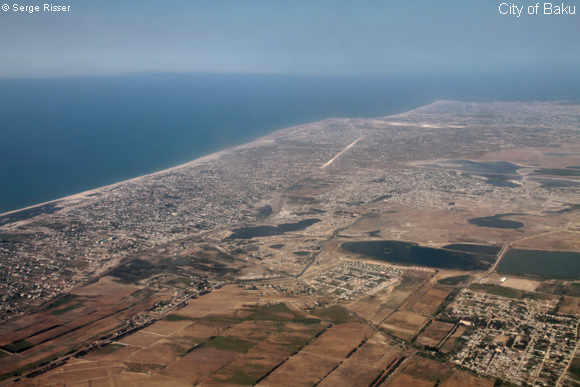
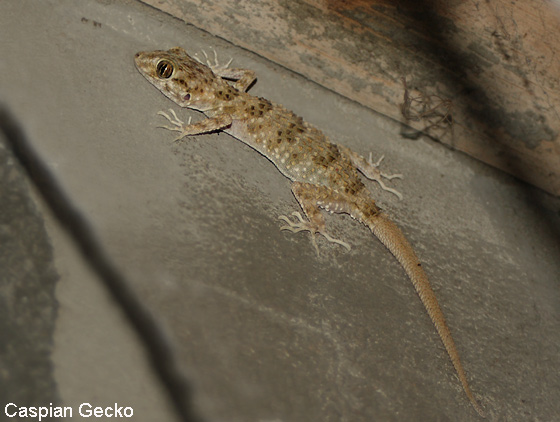
On the way back to our base in the suburbs, we saw them: the famous oil wells of Baku. Seeing producing oil fields right next to habitation lots is quite a strange experience! The suburbs of Baku are growing at a steady pace and there is not much space left for birds. A Lesser Grey Shrike was the best pick on the way. Back at the datcha, we were welcomed by our hosts and had a great dinner under the close scrutiny of Caspian Geckos.
June 2nd, 2010 :
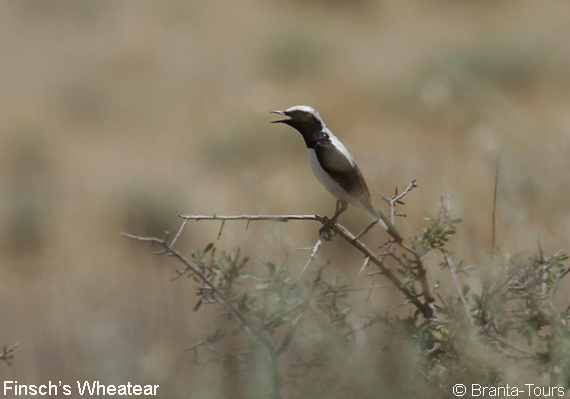
On the birding side, this second day was still quite flat: most of it was devoted to the preparation of our trip to Nakhchivan and we couldn´t really escape to the countryside. A short walk by Serge to the Caspian seashore still produced some results: a Caspian and 2 Gull-billed Terns, a Finsch´s Wheatear and a Woodchat Shrike. A Slender-billed Gull also flew over the garden.
We then went to the airport to pick up Pavel and to buy our tickets for the flight to Nakhchivan on the next day and spent the rest of the day planning the trip. Two Laughing Doves in the streets of Baku were the only new addition to the list. After another nice dinner, we went to bed full of hope: Nakhchivan was so close!
June 3rd, 2010 :
To reach Nackhchivan from Baku, there are two possibilities: take a bus or a taxi that goes through Iran or take a local flight. The first option would have required a visa to Iran, which certainly isn´t the easiest one to get in these days for western Europeans, so we chose the second option. Well guided through complicated administrative procedures, we finally made it to Nakhchivan after a short flight over the neighbouring enemy. Geopolitical aspects were beyond the scope of this trip, but you can´t go to Azerbaijan and remain ignorant of the conflict with Armenia over the status of the province of Nagorno-Karabagh. And on arriving to Nakhchivan, it doesn´t take long before you understand the importance of this other small piece of land for both contestants.
So, no surprise that it takes so many tortuous administrative roads to get there!
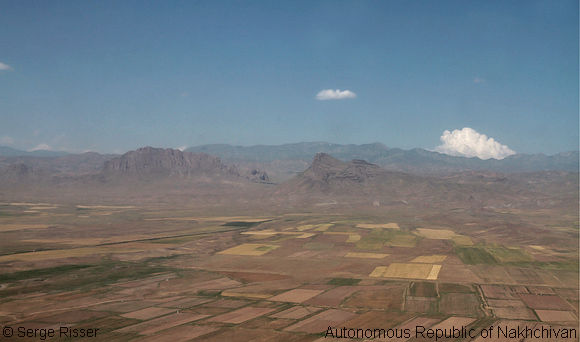
Arriving in Nakhchivan from Baku creates quite a surprise. No busy traffic and dirty roads here. No crowds, no noise, no disorder. The new buildings along the main road are quite surprising in such a small piece of semi-desertic land, where activity is reduced.
We were warmly welcomed by Arzu, our Nakhchivan guide and teacher at the academy of sciences of Nakhchivan. He had arranged everything for us, from accommodation and transportation to meetings with officials there. Our first steps in this land led us to the office of the Director of the Academy of Sciences, who told us about the rules to respect and about the places that were planned in our trip. Lesson 1: never get close to the Iranian or Armenian border. Lesson 2: never get close to the Iranian or Armenian border. Lesson 3: never get close to the Iranian or Armenian border. Besides this, we were free to prospect the different places that Arzu had selected and were just asked to report our observations to the academy of sciences. The day ended with a great dinner at Arzu´s house and just a few observations in the city: 3 Whites Storks, a Hobby, 3 Laughing Doves, a Syrian Woodpecker and an Eastern Olivaceous Warbler in the garden.
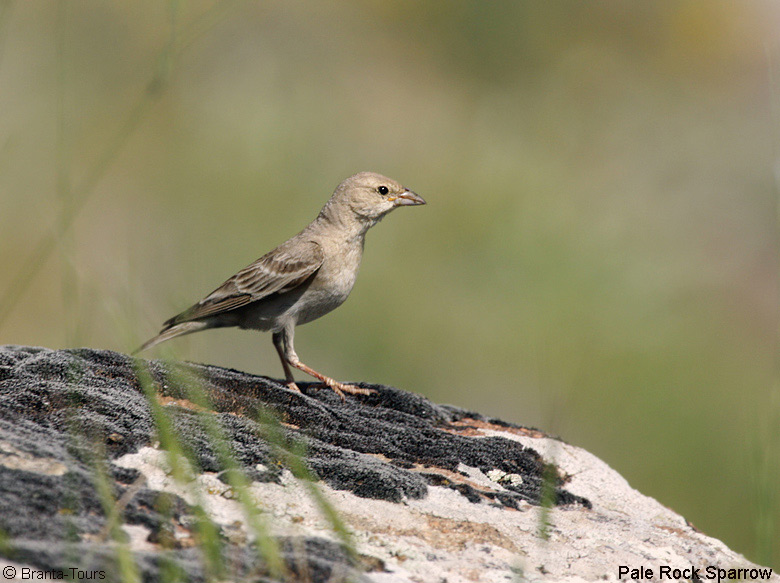
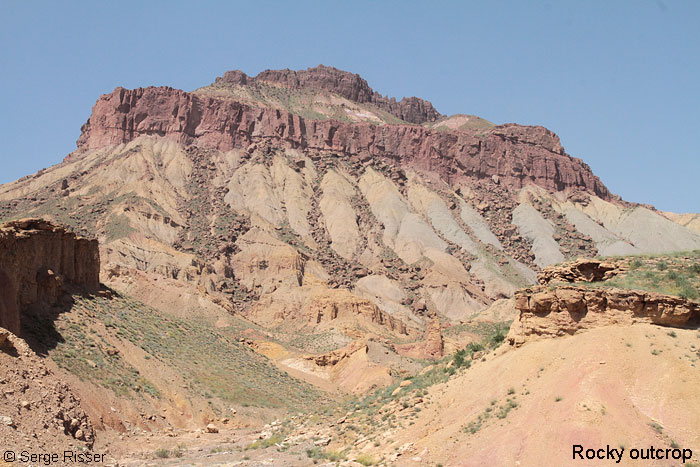
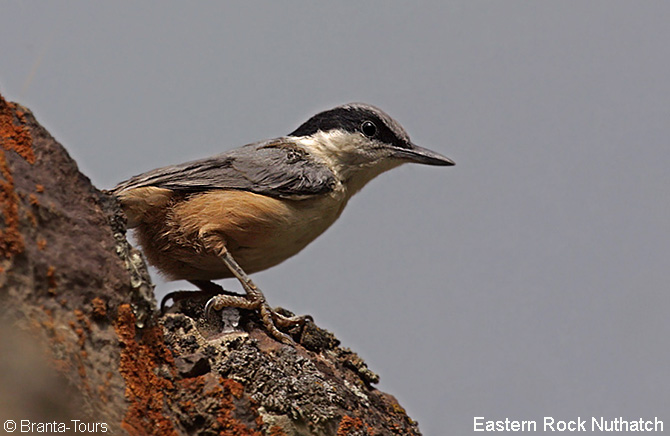
June 4th, 2010: Given the hot climate, we had an early start (at 05:00 AM) and took the direction of Ordubad at the eastern end of Nakhchivan, not very far from Iran. Arzu had recently found a Persian Wheatear there. Along the road, we were pleased to see already some species in numbers: Crested Lark, Isabelline Wheatear, Rollers and Common Bee-eaters. We also made several sightings of Egyptian Vultures and Long-legged Buzzard. Our first real stop along the road to prospect a rocky outcrop brought us our first target: the huge and noisy Eastern Rock Nuthatch. An inconspicuous Pale Rock Sparrow was also briefly seen and photographed by Pavel and Rock Sparrows were also in the area.
A few kilometres further, we stopped near a dry river bed and Arzu told us that this was the place for Persian Wheatear. And indeed, it took only a few minutes to find a singing male perched on a telephone post. The area had other species to offer: Red-billed Chough and Alpine Swift were flying over; a group of about 25 migrating Rosy Starlings flew past; a pair of Crag Martins had its nest under a bridge; at least 2 pairs of Eastern Rock Nuthatch, 2 pairs of Finsch´s Wheatear and 1 of Eastern Black-eared Wheatear held territories; Lesser Grey and Woodchat Shrikes were sitting on wires further down the road; Syrian Woodpeckers and Golden Oriole were heard in gardens nearby. We also disturbed two mammals while checking the semi-desertic hills to the west: a Golden Jackal and a Fox. And finally, hearing begging calls, I climbed a small slope and found a pair of Persian Wheatears feeding two unfledged youngs!
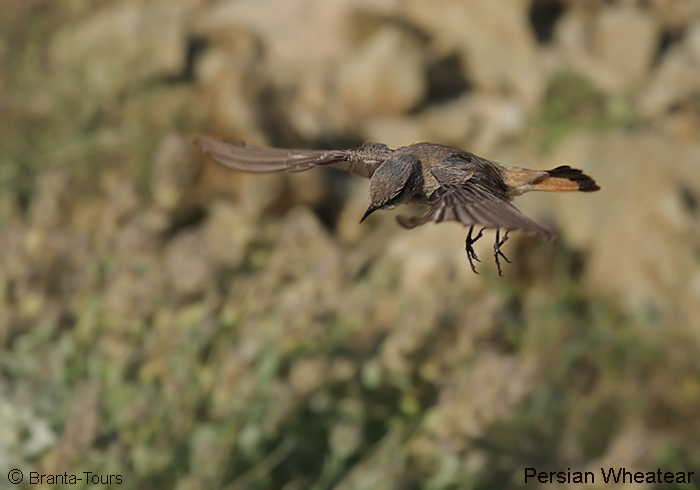
It was almost 40 C under shadow when we took the road back to Nakhchivan. We made several stops en route to drink teas: one in the nice town of Ordubad under the shadow of huge plane trees and one at a warm water source in the foothills of the Lesser Caucasus. Here again, Pavel found 2 more Persian Wheatears (Oenanthe chrysopygia). Another roadside stop allowed us to find a Long-legged Buzzard nest, as well as another Pale Rock Sparrow and a Finsch´s Wheatear pair.
Back home quite early, burnt by the sun and cooked by the heat, we had another great dinner at Arzu´s family and went to bed as early as our excitement allowed us.
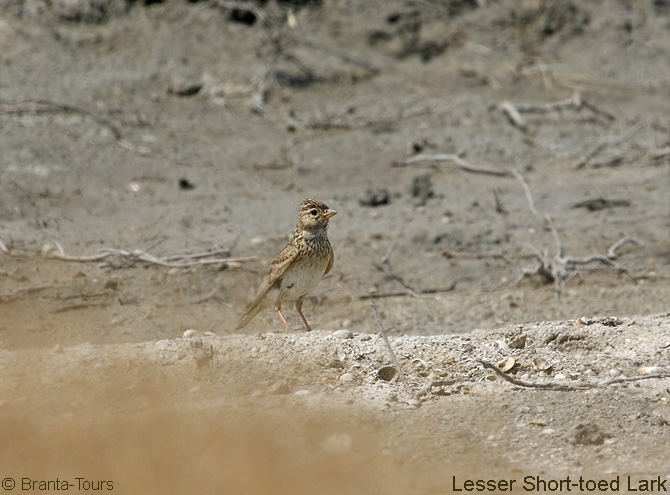
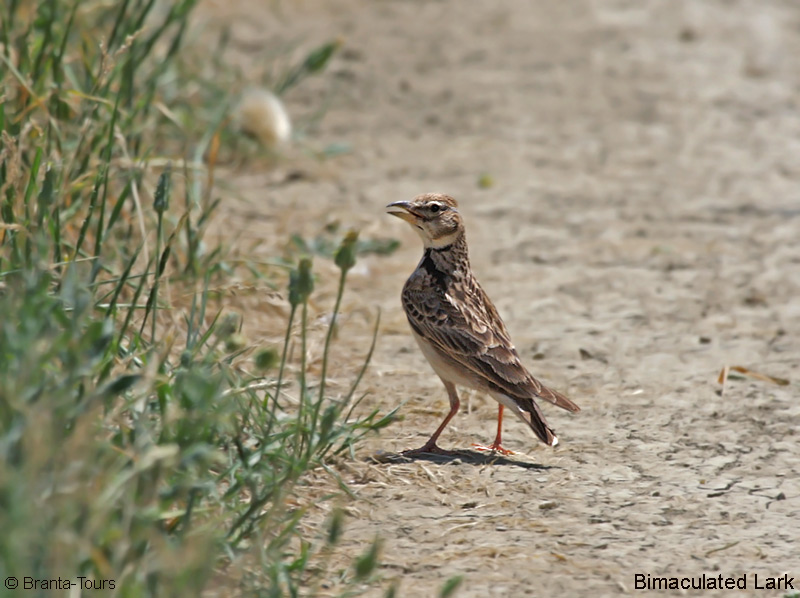
June 5th, 2010 : The cool temperature of an early morning start was very welcome on this 3rd day in Nakhchivan, but we knew that it wouldn´t last for long. So, we drove quickly to the famous (to local people) mountain called Ilan Dag. Maybe not that quickly, given the poor state of some of the dirt roads we had to take. The steppic plains around Ilan Dag are without any doubt the kingdom of Isabelline Wheatears and larks. Lesser Short-toed, Short-toed, Crested, Calandra and more important for us, Bimaculated Larks. Bimaculated Lark proved to be quite common, with about 20 singing males heard without leaving the road. On the contrary only 1 Calandra Lark was seen. A few Long-legged Buzzard were patrolling the area.
Progressing further away from the plain to the foothills of the Lesser Caucaus, we took the dirt road to the local village, the only place known in Nakhchivan (and Azerbaijan) for the See-see Partridge. In fact, the species had so far never been seen alive by ornithologists in the country, but partridges shot by hunters had been brought by local guards to scientists and identified as See-see Partridges. First step: find the guard. Second step: find the place. Third step: find the bird!
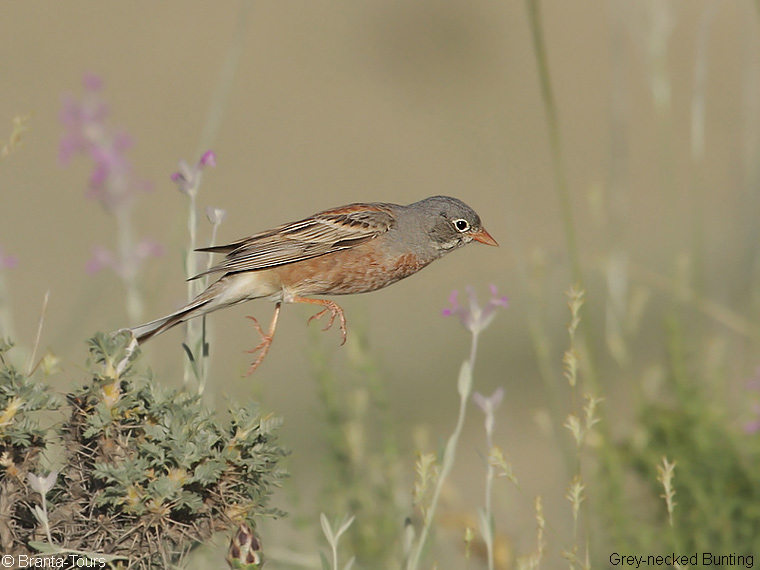
As usual, we were stopping along the road every 2 minutes to check almost every bird flying past (except Crested Larks and Isabelline Wheatears). During one of these stops, we heard the song of a Grey-necked Bunting and quickly managed to find it, singing on top of a small bush. A second male was also singing a few hundred meters further.
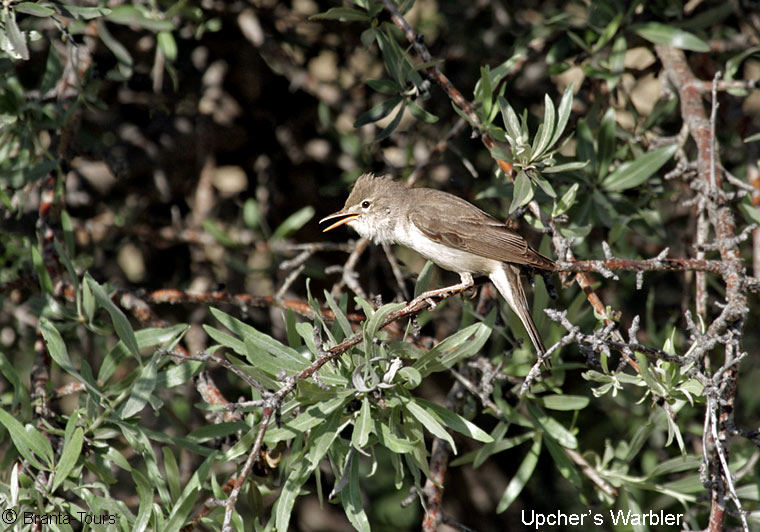
On arrival at the village, our luck was gone and we couldn´t find the guard. We decided to stay in the area to try to find the partridge and stopped along a small valley from where we could reach a rocky ridge that looked promising. In the few bushes near the river, a singing passerine was quickly identified as Upcher´s Warbler. In total, no less than 5 of them were present in the area! Quite surprisingly for such a habitat, a Penduline Tit also flew past just above our head. The walk along the ridge gave also very good results: an Eastern Orphean Warbler, 3 Pale Rock Sparrows and about 15 Rock Sparrows, 13 Black-headed, 2 Rock and 2 Ortolan Buntings, 1 Blue Rock Thrush, 1 Persian and 3 Finsch´s Wheatears, several Eastern Rock Nuthatches and 4 Chukar… but no See-see Partridge. On the way back to Nakchivan under a burning sun, stopping every now and then, mostly for Bimaculated Larks, we finally found the guard who was going back home and convinced him to show us the place for See-see Partridge two days later.
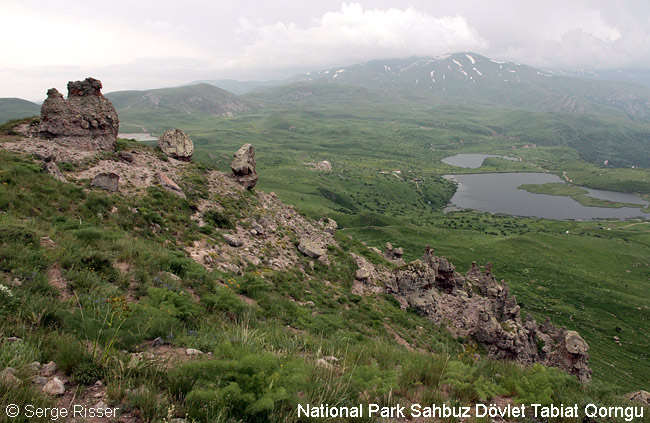
June 6th : Much to our pleasure, today´s plan was to drive up the Lesser Caucasus, to find mountain species, as well as fresh air. The place where we had planned to go was a national park, called Sahbuz Dövlet Tabiat Qorngu. The contrast with the plain a few kilometres from there was very strong: we were here in the subalpine and alpine zones. Most of the species were different from the ones we had seen so far: Red-backed Shrikes were everywhere in bushy areas and Common Rosefinches were calling from all over the place. Whinchats and Northern Wheatears were common in the grassy areas and a search in a rocky place allowed us to find the local subspecies of Twite, called Asia Minor Twite and Horned Lark. And while I was checking the mountain slopes high above us with the hope of finding a Caspian Snowcock, I found a Brown Bear patrolling the mountain top. A very unexpected but warmly welcomed addition to our trip list!
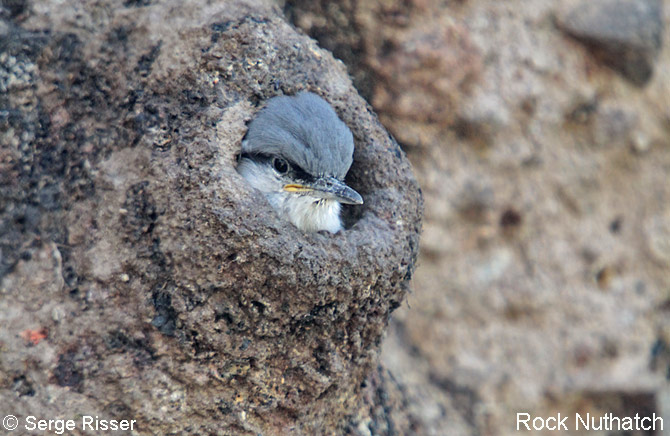
The small lake not far behind us was also holding Little Ringed Plover, Common Sandpipers and a pair of Ruddy Shelducks with chicks. Finally, as we were having lunch on the shore of the lake, we found an occupied nest of Rock Nuthatch and were delighted to see the parents regularly coming to feed the youngs.
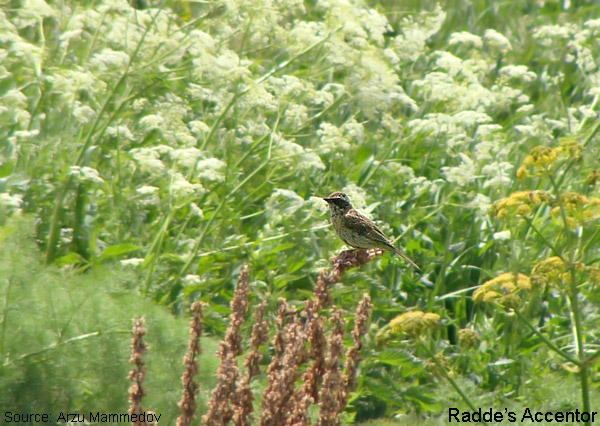
After lunch, we drove further to another small lake in a very popular place for local people who were trying to escape the heat of the lowlands. The small lake produced Black-headed Wagtail, Sedge Warbler and Redshank, probably all breeding there. However, this was not enough and we continued on a small track up the mountain until we had to leave our car and continue on foot. Raptors were quite numerous here and Pavel, Serge and I recorded Griffon Vulture, Short-toed Eagle, Booted Eagle, Long-legged and Common Buzzards and Sparrowhawk. Small groups of Red-fronted Serin were also flying past. Finally, I briefly saw a small passerine in the low vegetation. It was very elusive and could only be seen in flight for half an hour until it landed on a rock and started singing in front of Serge and I: a Radde´s Accentor! When we came back at the car, we learnt from the rest of the group that they had also seen one, at a lower altitude.
As the storm was coming close, we quickly had to leave the area. However, despite the rain, we tried another stop in a rocky area with scattered bushes along the road, next to a river. After only a few minutes, Serge spotted a brilliant male White-throated Robin and in total, 2 males and 1 female were found in the area. Without going very far from the road, we encountered many more interesting species there: Griffon Vulture, Golden Eagle, a male Rock Thrush and a male Blue Rock Thrush feeding its young, a flock of 4 Red-fronted Serins, Eastern Black Redstarts, Crag Martins, Eastern Rock Nuthatches, Ortolan and Rock Buntings and our first Lesser Whitethroat. We finally decided that this was enough for the day and we came back to Arzu´s place for dinner.
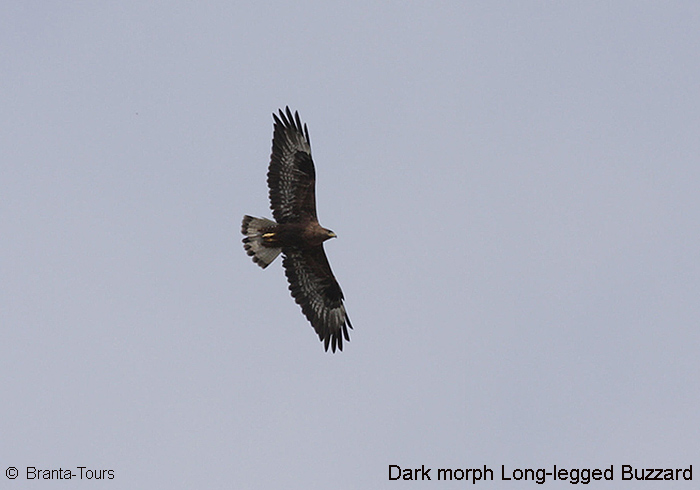
June 7th, 2010: In order to be able to hear and hopefully see the See-see Partridge, we had another early morning start to be on time to meet the guard. We drove through the Mountain village and then along a river already partly dry. The species on the way where the same as 2 days earlier in the same area, so we managed to drive almost without any stop along the way and made it on time. The guard showed us a rocky slope over the river that we had been following and told us that the partridges where using this place when coming down to the river to drink. But despite a careful scrutiny of the slopes we could only find Chukar. Was it already too late in the day? Or was that place not used all year long? The place was still worth a long stop, especially for Wheatears and we found at least 7 Black-eared (1 nest), 1 Finsch´s and one family of Persian. Two Upcher´s Warblers were also singing despite the almost total absence of bushes and both Rock and Eastern Rock Nuthatches were breaking the silence of the area. A dark morph Long-legged Buzzard, a Common Buzzard and 2 Griffon Vultures flew over the place.
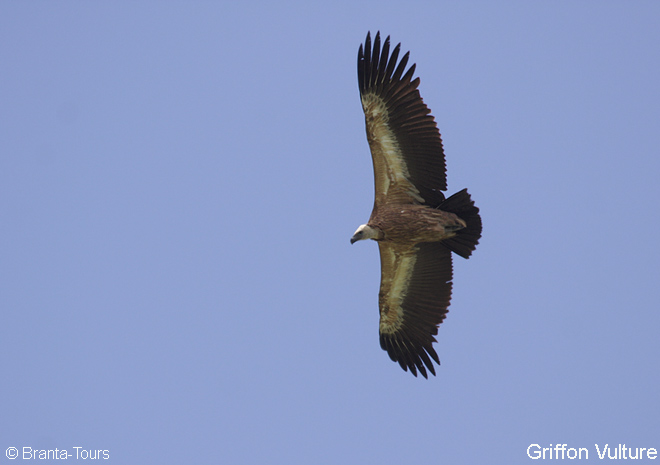
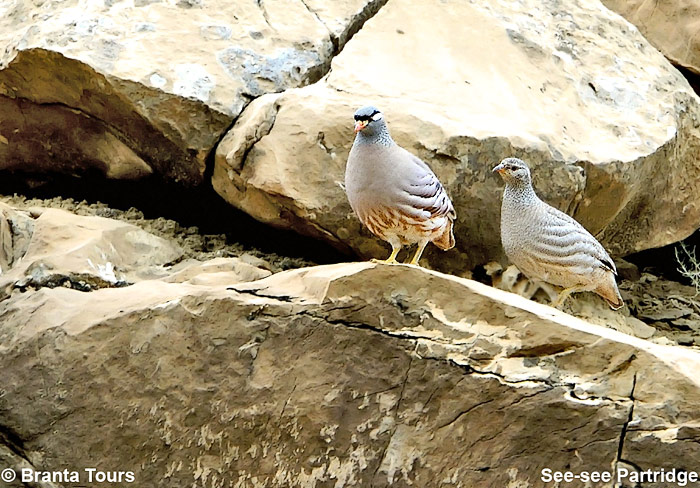
We moved on to our second stop, which appeared much better than the first one for the species: it was a narrow gorge, with quite steep low cliffs on both sides and obviously away from almost any human activity. We parked at the beginning of the cliff and after less than 100 meters walking heard the characteristic song of the See-see Partridge. It was very short, stopped as soon as we appeared in the gorge and only Arzu and I had heard it, but there was no doubt! Then, suddenly, a small partridge flew away leaving us no time to take our binoculars… it wasn´t going to be easy. But after one hour of careful search, two males showed up on large boulders below the cliffs and started singing! Other species in this place were Pale Rock Sparrows, Rock Sparrows, White-throated Robin (1 family), Persian Wheatear (2 pairs), Black-headed and Ortolan Bunting and Rock Nuthatch. Above our heads, at least 2 Griffon Vultures and a Golden Eagle were patrolling the area.
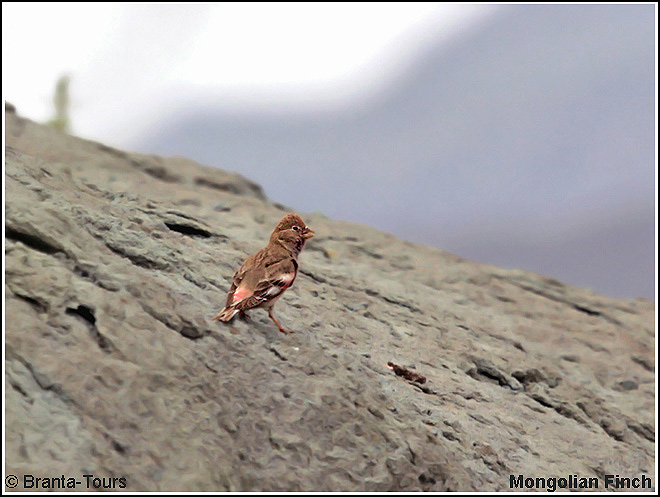
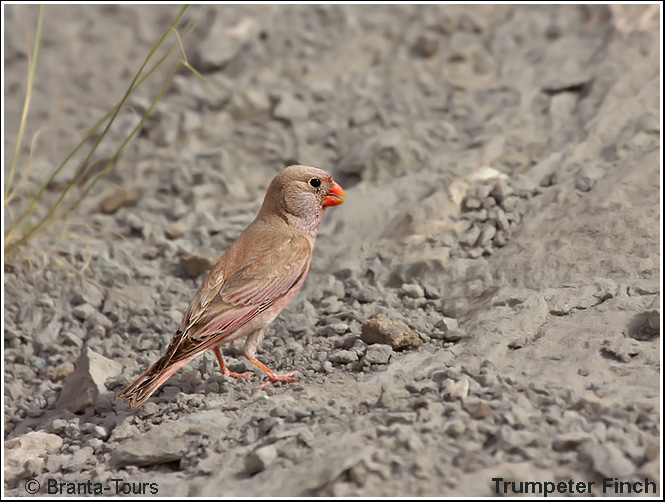
We took the trail back to the plains, not before having shared the lunch with the guard under the shadow of the only trees in sight. On the way back, two pairs of Black-bellied Sandgrouses took flight in front of us. It was only early afternoon on our last birding day in Nakhchivan and despite the heat and the burning sun, we decided to try our chance in another rocky area, where Arzu had previously seen Trumpeter Finch. We had hoped to find four species of finches and had so far only managed to find the one that we all knew before: the Common Rosefinch. So, we headed to Neilan Dag to try our luck. The place, a reddish cliff in a semi-desertic area was truly fantastic, but with 40 C under shadow, bird activity was very low. Two pairs of Ravens, a Short-toed Eagle, an Egyptian Vulture and the now usual Rock Nuthatches, Pale Rock Sparrows, Finsch´s and Persian Wheatears had however been seen, when I suddenly saw Pavel waving it´s arms about 500 meters from where I was. When I finally arrived, this was only to see the picture of a bright Trumpeter Finch on his camera. The bird was gone. I decided to wait at that place, until the bird would reappear, which quickly happened. It was not a single bird that arrived, but a small group of 5. And they were not Trumpeters, but a family of Mongolian Finches! And a few minutes later, a family of Trumpeters joined them! In less than five minutes, our finches list had made a decisive step forward.
These were our last observations in Nakhchivan. Except for the Crimson-winged Finch, we had managed to find all our target species, including two that had apparently never been officially recorded alive from the area: See-see Partridge and Mongolian Finch. There is however little doubt that these species must be quite common there given the size of the potential habitats. And there is no doubt that other species are still hiding there, in the vast wild areas of Nakhchivan. In particular, it would have been very interesting to be allowed to get close to the large river drawing the border with Iran. But this is the border with Iran…
June 8th, 2010 : On this last day in Nakhchivan, we left our binoculars in the bags and switched back to civilian duties: presentation at the academy of science, guided tour of the city and its historic monuments, and finally administrative controls at the airport. In the afternoon, we were back in Baku, where a bit of fresh air was waiting for us at our datcha.
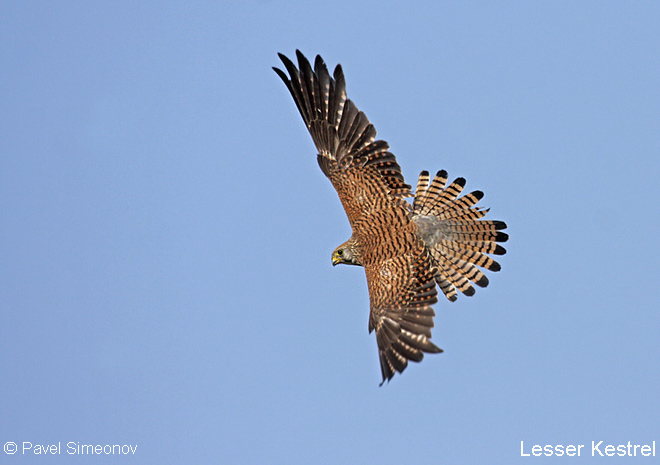
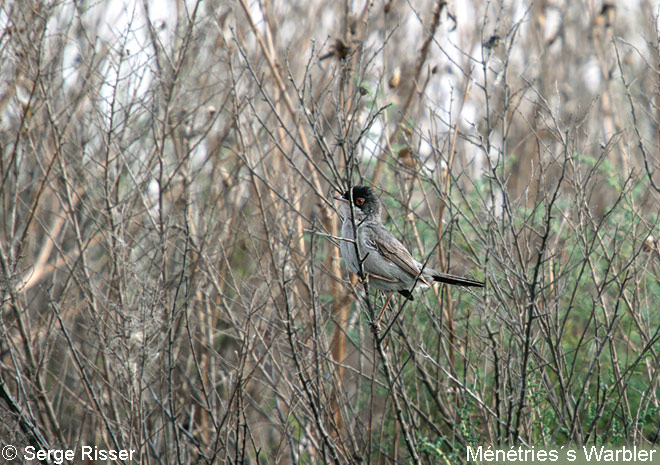
June 9th, 2010: Before heading to the Caucasus for the second part of the trip, we had planned a day out not far from Baku to visit Shirvan National Park. This park covers thousands of square kilometres of semi-desert and steppe near the Caspian Sea and holds a strong population of Goitered Gazelle. It was in fact created to save this species from getting extinct in the country and does a great job for this. It also holds bird species that we were hoping to see. And, for once, finding them was not a hard task. We entered the park and stopped for breakfast just after the entry under the scrutiny of Lesser Kestrels (they were just everywhere in the park). Among them, a pair of Red-footed Falcons may well have been breeders given the late time in season for migrants. But we couldn´t prove it. Further away, a small passerine was singing on a bush. It was our first target of the day: Ménétries´s Warbler! Back on the car and only a few hundred meters later, two Black Francolins crossed the trail in front of us. This was target species number 2! Fifteen minutes later, after having checked several Bee-eaters, we found a Blue-cheeked Bee-eater: Target species number 3!
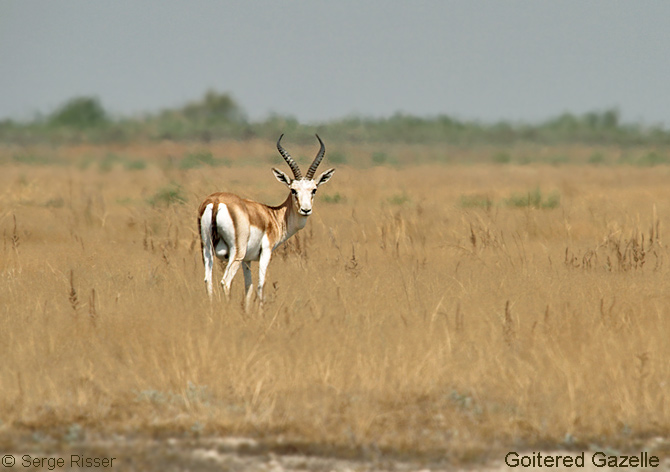
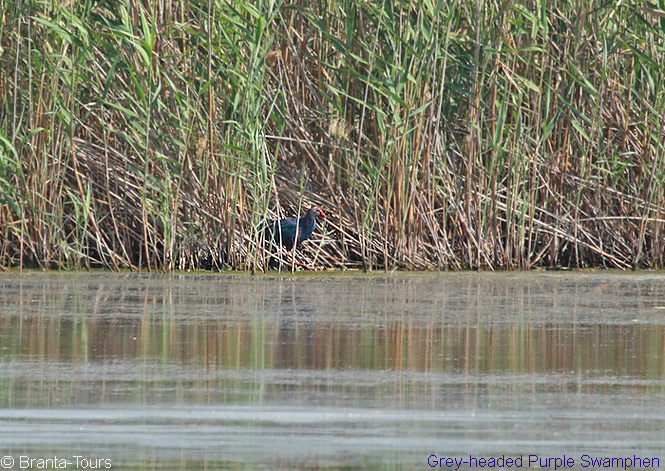
Goitered Gazelles were quite numerous and we saw them all along the visit. We then reached a small lake in the middle of the park, completely surrounded by reeds. We used the boardwalk to reach an observatory offering a good view over the lake. Twenty Great crested Grebes, two Red-crested Pochards and over twenty Whiskered Terns were in sight. Reed Warbler and Great Reed Warblers were calling in the reeds and two Penduline Tit were also found. After a couple of minutes, we managed to find our fourth target species: an adult and a young of Grey-headed Purple Swamphen (P. porphyrio caspius).
We then got somewhat lost in the park while trying to find a lagoon where Pavel had seen a Greater Sand Plover the year before. We first hit the shore near construction works in a bushy area where a colony of hundreds of Spanish Sparrow was making a terrible noise. The only other birds in the area were Lesser Grey Shrikes. Then, we encountered some floodings, where Shelducks, Ruddy Shelducks, Black-winged Stilt and Kentish Plovers were apparently breeding. But we finally made it to the lagoon where our car suddenly decided to leave us on our own, at about 1h drive from the closest human settlement… We took some time to look at the 50 Caspian Gulls and 30 Gull-billed Terns resting there, but couldn´t find any other shorebird than a Redshank, a Ringed Plover, a few Kentish Plovers and a flock of 13 Greenshanks flying south. The car finally only had a minor problem, so we managed to get away from the place, but couldn´t stop on the way back to look at all these larks that were taking off in front of us (mostly Calandra and Lesser Short-toed).
Our next stop did not target birds specifically. We went to a place called Gobustanto have a look at the famous petroglyphs. Very interesting to see how well preserved all these are, even after having undergone several earthquakes! From there, we had a great view over the Caspian basin. Few bird species where present there, but a Chukar was calling and Rock Nuthatch were noisy as usual. Finally, we also found a male Pied Wheatear.
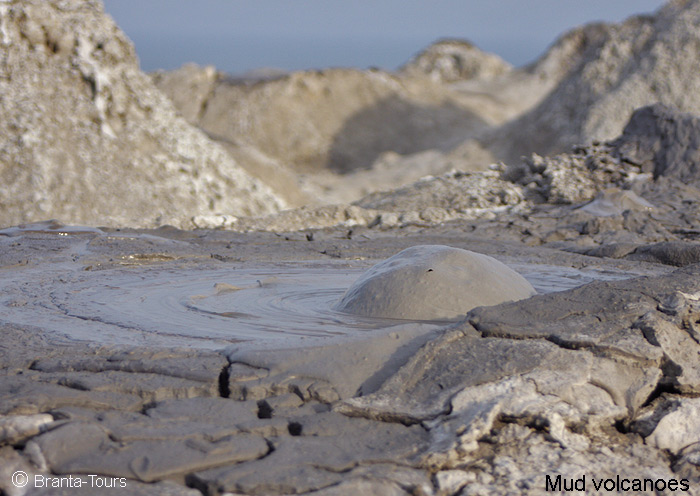
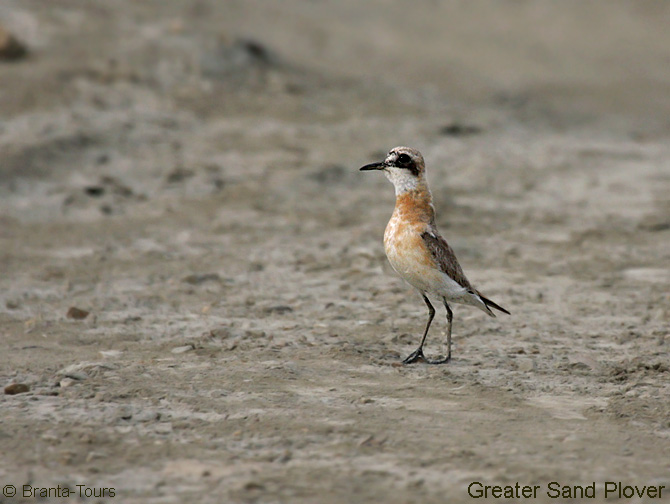
A few kilometres from there, we saw another great curiosity of this place: the mud volcanoes. In this lunar place where only the noise of mud bubbles exploding could be heard, my eyes got caught by a distant lark. As I was approaching what turned to be a Lesser Short-toed Lark, I saw a bird running on my left: a female Greater Sand Plover! I quickly called the rest of the group, and a second bird showed up. This time a male. Then, I saw them, two tiny chicks probably just 2-3 days old. They were running away from us while the parents were trying to lead us in another direction. We didn´t stay long there, in order to avoid too much of a disturbance and took the road back to Baku.June 10th: Another transition day, this time to reach a beautiful mountain village (elevation: 2000 m) in the Greater Caucasus, not far from the Daghestan border. As we progressed to the north and reached higher altitudes, the climate became cooler and the vegetation turned green. Despite a few unexpected stops due to mechanical incidents, we made it safely to our high-level base, a small village hidden at the end of a dirt road near the top of a valley. The impressive construction works next to our village indicating a future ski resort where sounding like bad news for the future of the area, but until now, the place is still well preserved.
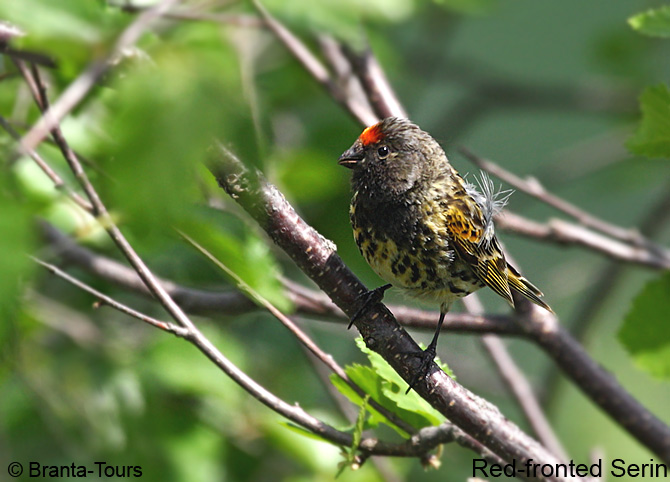
We arrived in the evening at the house of our new host, and were, as usual, received with a lot of kindness and enthusiasm. Our local escort is a keen alpinist, used to guiding foreign alpinists in his mountains. So, we had no doubt that we could trust him in our excursions in the area. A first birding walk around the village and the adjacent meadows already revealed the presence of Eastern Black Redstarts, Red-fronted Serins, Snowfinches (1 pair), Common Rosefinches, Whinchats, Marsh Warblers and Corn Crakes among others. But it was already time for gathering for dinner and planning for the next days.
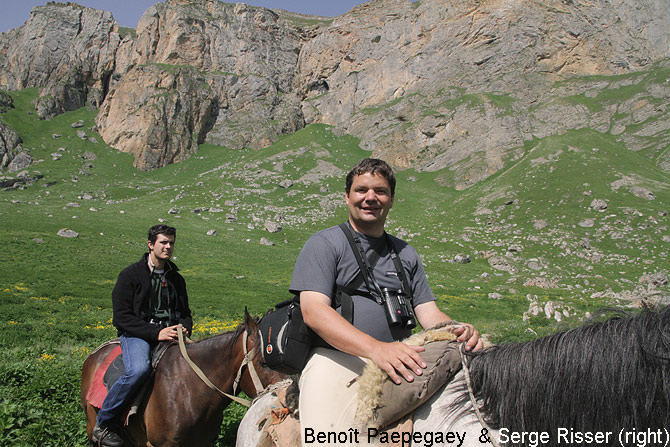
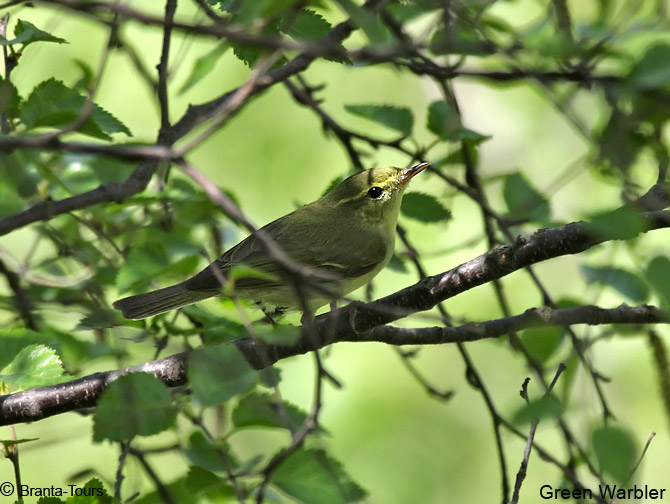
June 11th : A new experience in this trip was planned for the day: a trip to the mountain on horses, which would allow us to climb the slopes faster. We rode for an hour or so before our first stop. From there, we could already hear the strange curlew-like song of the Caucasian Snowcock. We managed to see 3 of them on ridges very far on the other side of the valley. Closer to us, raptors were patrolling: 2 Lammergeiers, 1 Golden Eagle, a few Griffon Vultures. Red-billed Choughs were common and noisy and Yellow-billed Chough a lot scarcer. We also found an Alpine Accentor. A second stop at the summit of a slope covered by small trees allowed us to hear and see two typical species of the Caucasus: the Caucasian Chiffchaff and the Green Warbler. At least 2 of each were singing. Serge and I decided to leave the horses at this place with Pavel and started to climb in the direction of a rocky slope just recently uncovered by the melting of the snow and situated at the base of a cliff. This area looked perfect for finding the high mountain passerines of the Caucasus. And it was. We quickly found a male and two females Great Rosefinch in the boulders. What a fantastic bird! Further up, 3 Snowfinches flew over and a few Ring Ouzels were feeding here and there. Near the top of this slope, Serge also sighted a Wallcreeper.
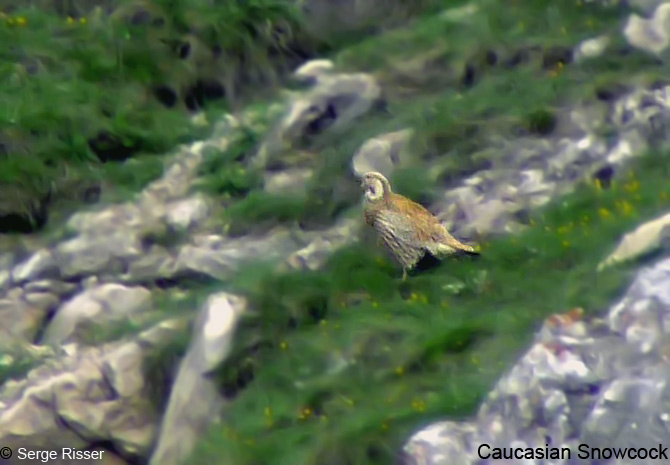
A group of about 70 East Caucasian Tur (an endemic Caucasian goat) was also in the area. We were still hearing Caucasian Snowcocks, this time a lot closer, and we finally managed to see a pair quite well. A third bird was walking with the goat group, which was now on top of the cliff. As our escorts later told us, these two species are known to associate quite often, apparently for improving their chances to detect dangers.
All this together made it for a fantastic day. But the only redstarts we had seen were Black Redstarts. Even in the rocky areas at the altitude of 3000 m…
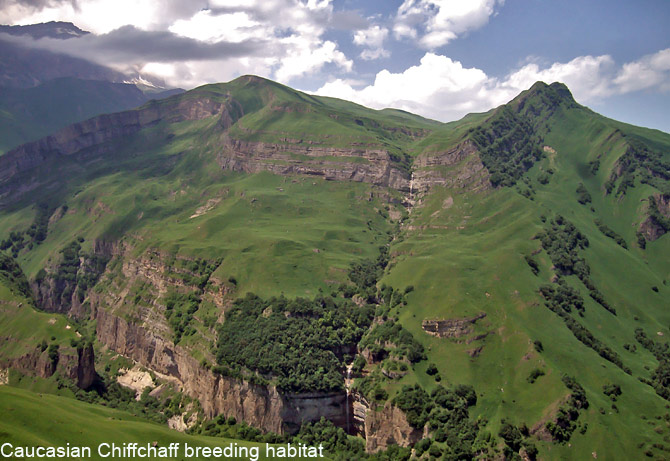
June 12th, 2010: Today, we explored the same areas as the day before, this time without horses. Several walks around the village didn’t bring any new species. We were in particular trying to find the Caucasian Black Grouse, but we were too late in the season, the lek was not used anymore, and finding one of them was now just pure luck. This time, we didn’t succeed.
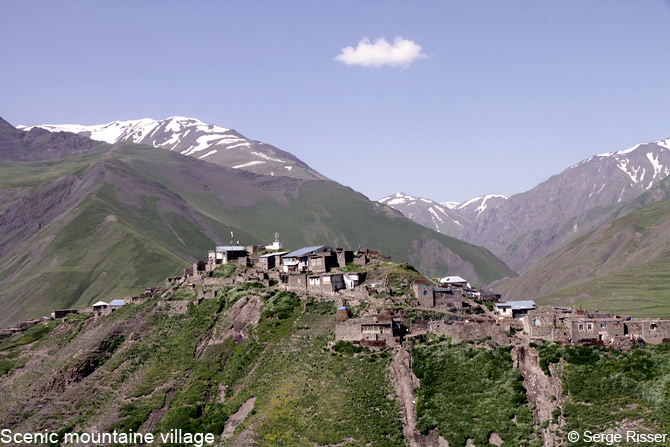
June 13th, 2010: Having failed to find Güldenstädt´s Redstart, we decided to drive to the next valley, where our guide had seen them earlier in the season. The village where we were going, was just on the other side of the summit on which we had seen our first Snowcocks two days before, but it took almost 3 hours to get there on a tricky and very impressive road up this new valley. The whole landscape was very impressive in fact and, quite unexpectedly quite different from our high mountains. The width of the valley especially, was reminding us more of Himalaya (or at least of what we´d seen of Himalaya in documentaries). The scenic mountain village is built on a “hill” on the top of this valley, at an elevation of 2500 m. Almost an island in the mountains. It is not hard to understand why people settled there, since it is almost impossible to launch an attack on it.

We were however not interested in the conquest of this place, so we peacefully drove through it and drove up the mountain as far as our Lada Niva could take us (and even a bit further). And then, it was each of us against the slope, in the hope of reaching as close to the 3700 m summit as possible. We passed by the camp of shepherds, who had arrived there a few days before after completing the transhumance, and continued in direction of the summit at our pace.
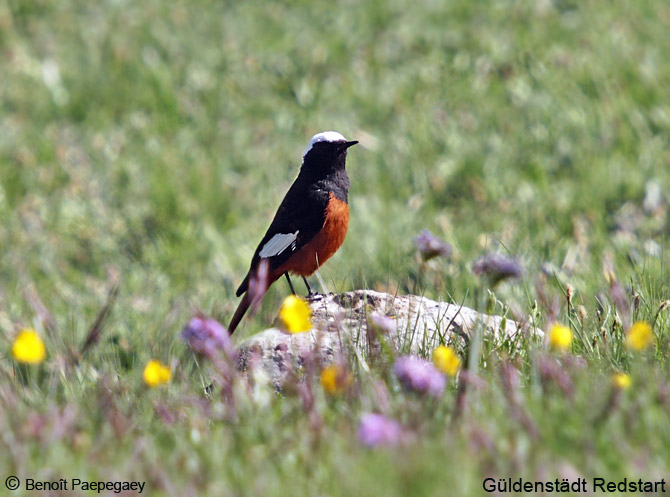
As we arrived at the bottom of the cliffs, at an elevation of about 3200 m, where rocks were progressively replacing alpine meadows, Serge and I stopped to decide how to prospect the area. We didn´t have time for a lot of hesitation. About 100 meters in front of us, a male Güldenstädt´s Redstart flew past! Not a single doubt was possible; the white wing-panels on black wings were so obvious. We finally found one pair and one extra male in the area. The pair appeared to have it nest somewhere up in the cliff and was coming down to take caterpillars from a small marshy area.
Over us, a pair of Lammergeiers, a Black Vulture, a few Griffon Vultures, a Peregrine and the usual Red-billed Chough were flying. Serge continued up the mountain to reach the summit while the rest of us stayed with the redstarts and Pavel succeeded to take a nice photo of the male. Meanwhile, Serge had at least 7 Caucasian Snowcocks up in the mountain. On the way back, alpine species were still making the show. More than 25 Snowfinches, 5 Great Rosefinches and 8 Horned Larks were seen on our way back to the village, alongside several Water Pipits.
June 14th, 2010 : After a last (failed) attempt in the morning by Serge to find the Caucasian Black Grouse, we finally left our high-level base to go back to the plain and Baku. A few last stops were still in our plans though.
The first one was done at a Collared Pratincole and Black-winged Stilt colony just next to the highway. Then, quite unexpectedly, at a random stop along the way near Gilazil and as we were looking at two Marsh Harriers, we spotted an eagle was soaring in the sky. Our first thought was that it was an Imperial Eagle, a species breeding not far from there. But as it came closer, we finally identified it as an immature Steppe Eagle, probably a late migrant.
The last stop in a bushy area quite close to the Caspian Sea was also productive: 2 Lesser Grey Shrikes, 1 Eastern Olivaceous Warbler, 2 Rosy Starlings, at least 3 Rufous-tailed Scrub-Robins and a Greek Tortoise.
And that was it. We came back to Baku for a last dinner with our azeri hosts and a last short night in the datcha.
June 15th, 2010: Early morning, there was time to review the checklist just before heading for departures.
Benoît Paepegaey, France
e-mailbpaepegaey@gmail.com